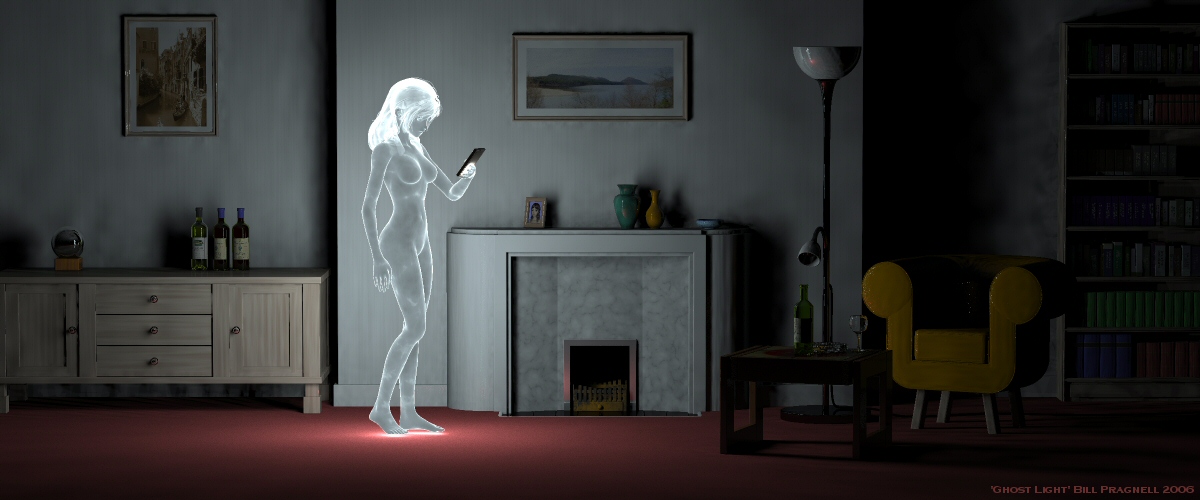
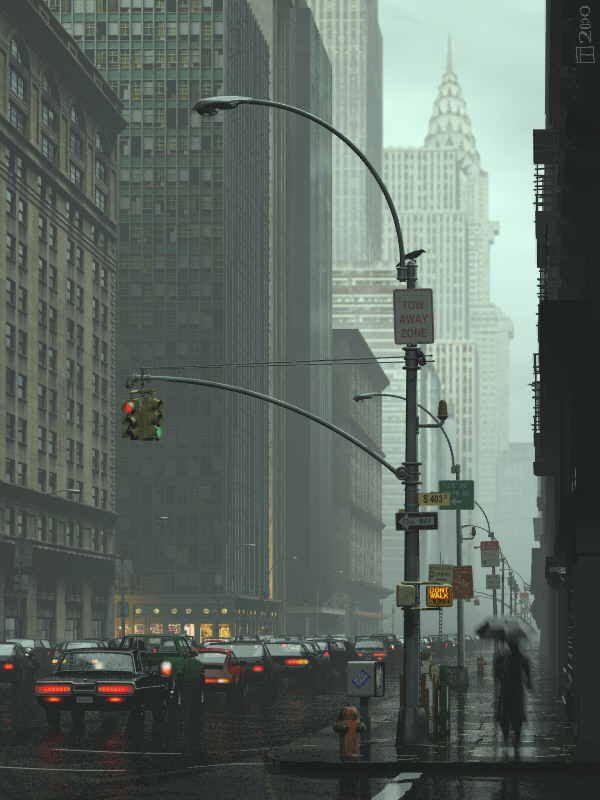
While it is still not available on our computers, it’s in the making at the moment: raytraced computer games engines. For the record: almost any modern 3D computer game, like Second Life, uses so called raycasting as computing method, which is a much smaller version of raytracing itself. To sum the differences up in short: raycasting cannot compute reflactions, retractions or shadows at all; raytracing can. This makes raycasting of course much, much faster, while raytracing was still slower in these days, but produces much more realistic pictures in the end. Movie productions, like Shrek for example, are all made with raytracers and big rendering farms in the background, as raytracing needs much more horsepower in your computer to work sufficiently than raycasting needs.
Popular raytracers for the normal human being are for example Blender, which was used to produce the movie picture “Elephant’s dream” or the Persistence of Vision Raytracer, short Povray. For examples, how raytraced pictures can look like, take a look at the Internet Raytracing Competition. This competition began back in 1996, there are six rounds every year, running for two months under a certain theme, everybody can apply with his own pictures and in the end the winners are voted. Many pictures there are really artistic and it is a nice showcase to demonstrate what modern raytracers are capable of; also a good showcase to get an impression of the rendering times for those pictures, if you take a look at the commentaries. For example a picture like this one or this one could never be done with a raycaster. Period. If you want to get an impression, what animations made with raytracers can look like, take a look at the animations there or download Elephant’s dream, since it is for free and a good showcase of what Blender is capable of (a new version of Blender was released some days ago, so it can now do even more).
[Mehr]