Autor: Bartholomew Gallacher

New upcoming trend: raytraced computer games (?)

While it is still not available on our computers, it’s in the making at the moment: raytraced computer games engines. For the record: almost any modern 3D computer game, like Second Life, uses so called raycasting as computing method, which is a much smaller version of raytracing itself. To sum the differences up in short: raycasting cannot compute reflactions, retractions or shadows at all; raytracing can. This makes raycasting of course much, much faster, while raytracing was still slower in these days, but produces much more realistic pictures in the end. Movie productions, like Shrek for example, are all made with raytracers and big rendering farms in the background, as raytracing needs much more horsepower in your computer to work sufficiently than raycasting needs.

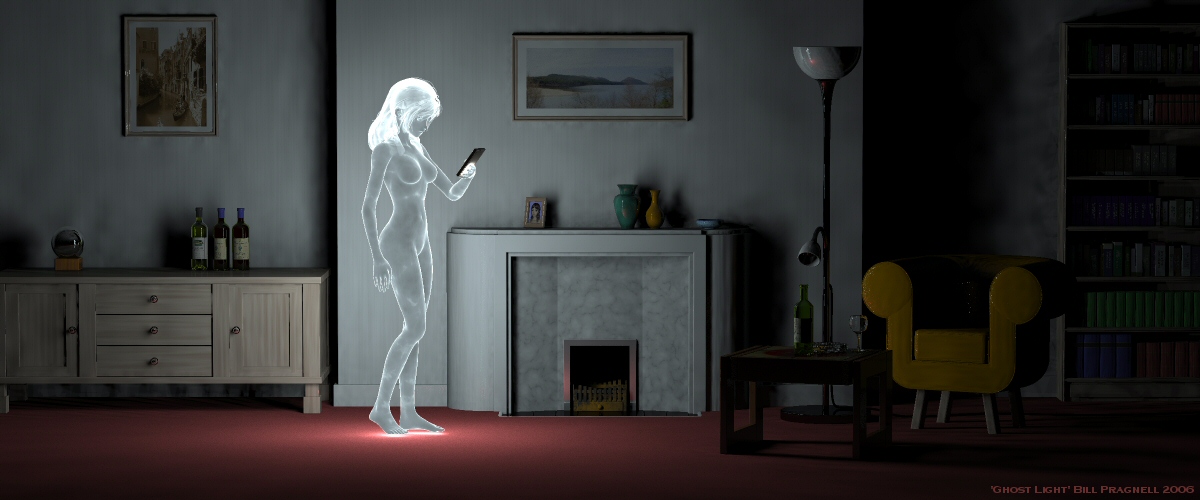
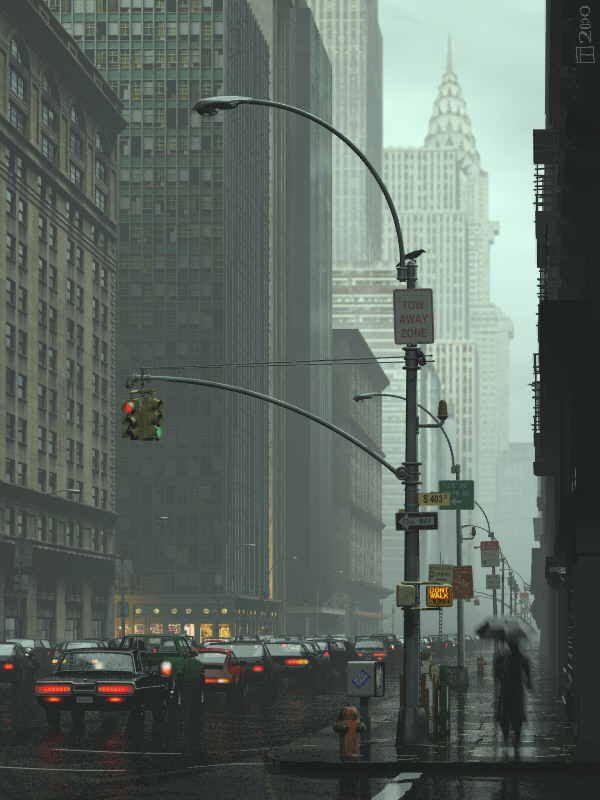
Popular raytracers for the normal human being are for example Blender, which was used to produce the movie picture „Elephant’s dream“ or the Persistence of Vision Raytracer, short Povray. For examples, how raytraced pictures can look like, take a look at the Internet Raytracing Competition. This competition began back in 1996, there are six rounds every year, running for two months under a certain theme, everybody can apply with his own pictures and in the end the winners are voted. Many pictures there are really artistic and it is a nice showcase to demonstrate what modern raytracers are capable of; also a good showcase to get an impression of the rendering times for those pictures, if you take a look at the commentaries. For example a picture like this one or this one could never be done with a raycaster. Period. If you want to get an impression, what animations made with raytracers can look like, take a look at the animations there or download Elephant’s dream, since it is for free and a good showcase of what Blender is capable of (a new version of Blender was released some days ago, so it can now do even more).

So, to sum it up: raycasters are the way modern 3D computer games do their work. It is the technology that has been used by good old Doom, Unreal Tournament, Quake and is also used by Second Life and many other games. It’s the industry standard for computer games. It is a subset of the possibilites what raytracing is capable of. Raytracing itself has been probably around even longer, but the CPUs were not fast enough until recently to use raytracing in gaming engines, until now, so it seems.

The University of Saarland is doing research in this field and a group around Professor Slusallek is using a new raytracing code that makes use of multicore CPUs and modern GPUs. They are going to showcase their software at the CeBIT and are claiming, that it is already good and fast enough for usage in modern computer games. There has already been a project around, called Quake 4 Real Time, that has enhanced the old Quake engine to raytracing usage. There are also many screenshots and a video on that page to showcase how such a game looks like and no, it’s not for download.

If you take in account, that they are using high end CPUs at the moment to achieve their goals, but the technology is already around and the software now, too, as it seems, then it would be not surprising to see raytracing game engines in around 3-5 years entering the computer gaming market, since until then the technology is more at the mid to low end and should be around in masses. This could be definitely the next big step in computer gaming and is worth watching it.

To sum the outcome up: at the moment a game designer has to work around the shortcomings of raycasting and its shortages. But with raytracing capable game engines this would be gone, you can build what you like, but of course you must place your light sources better.
About the economics of Second Life

The Register ran a story one week ago about the economics of Second Life. They are taking a very close look at the hard facts of the economics in Second Life beside the hype. Some measures are really interesting and were even new to me.

First, there is the churn rate. Only about 15% of the people who create an avatar in October 2006 logged in again after their first 30 days in SL. Very interesting measure, indeed. This drastically reduces the number of real residents, of course. Even more when you take all alts out.

There are about 4 million residents at the moment, when you do the math, this means that there are really about 600.000 residents who login regularly (alts included in this measure).

They are also pointing out that the maximum number of avatars in one sim is around 100 at the moment; also a very important restriction on doing business in SL. But then again, the business in SL has found ways around it.

70% of the revenue of Lindenlabs is generated at the moment by land sales and tier fees. No surprise in there. It’s a bubble at the moment, bound to burst sooner or later. Of course, LL would like it to burst later to generate more profit out of it.

Last number is that there are around 50.000 premium users at the moment; that’s not really much for such a big game/platform/whatever.

It’s a nice article with some new insides beside the mainstream and definitely worth a read.

The almighty lag hell

It seems, the more people are online, the more the almight lag continues to grow. SL is no fun noawadays when more than 30.000 people are online at the same time.

There is lag, lag, lag, teleporting issues, chat lag and other stuff, that turns down your experience. I just hope that the staff of Lindenlab is able to adress at least some of these issues on Wednesday at the scheduled downtime!

4 million residents reached

Today the resident count has reached a new peak – there are now over 4 million residents in Second Life. Again without much fanfare, like it was already when the 3 million mark was reached. This is no wonder, when you consider the problems that SL has in the moment and hopefully the next maintenance slot is somewhat going to fix.

Now let’s see how fast the 5 million milestone is going to be reached; I guess this milestone will be then again covered by a press release.

4 million residents

Germans and their Arbeitsamt

There are many Germans in the game. Many of them are looking for a job. So, what would have been a better idea then to found something like a job agency for them? Yes, there is one, called SLArbeitsamt, the homepage is here.

Well, what is an Arbeitsamt? It is the job agency, founded by the government over there. But, it is already called since some years „Agentur für Arbeit“ (Agency for Work), so no more Arbeitsamt anymore.

Whatever, taking a look at this homepage can be quite amusing. Most people looking for work are really young, so to speak; they should first hone their skills, then get to work. Of course, there are the typical jobs like model or escort – but hey, everybody can look good in SL without doing much, so there are masses of them. No wonder about that, but actually there are not soo much vacancies for them as you may think when you read the press about it.

There are also different kind of jobs, too, like a RW company looking for someone to hire in RL, their are looking for event hosts, DJs, hosts, designers, builders and other stuff.

My opinion? If you really want to get a job, it’s perhaps a nice way to get one at the entry level. But that’s all you can expect from them. Better jobs are surely not going to be posted there, they are given away like in RL, too, by reference and the reputation you’ve got in SL.

And it’s always better to look for yourself for a job then taking the service from such kind of agency at all.